MIPS welcomes ARC to the Atlas family of solutions for Physical AI
MIPS Acies platforms
Bring modern AI models into real-world systems
Inference-native AI acceleration based on open technology
A simple path to modern AI inference
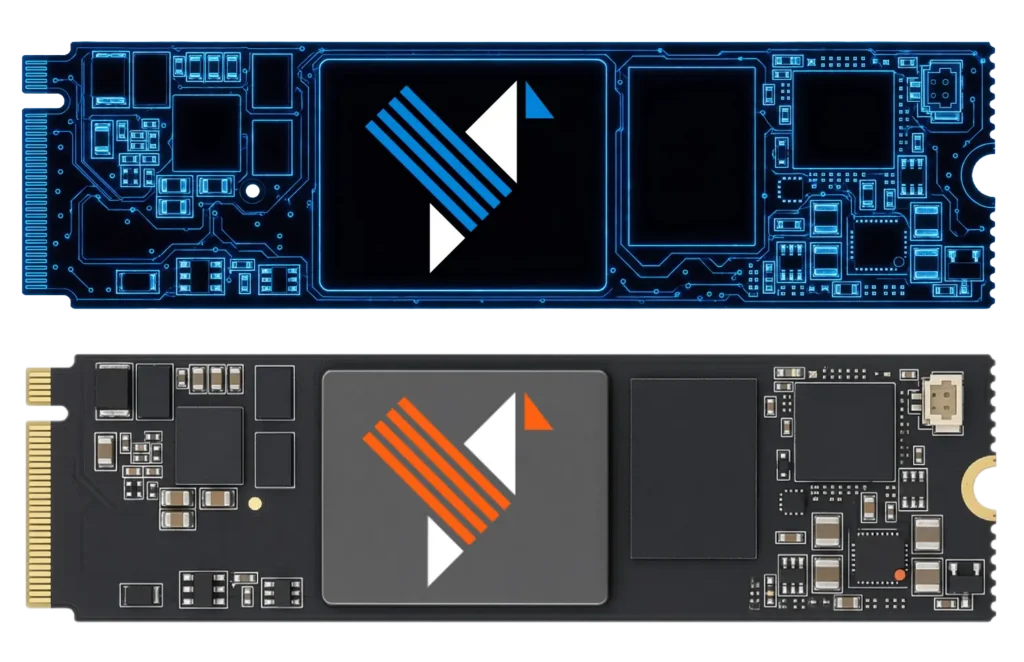
MIPS Acies is a programmable edge AI platform for robotics, intelligent automation, vision systems, and smart devices. MIPS Acies-1 combines standards-based RISC-V compute, an open software environment, virtual development models, and model lowering services into an M.2 PCIe module to help developers move from AI models to efficient local inference.
the tokens per watt of leading AI inference systems
50 TOPS | 10W 8 cores | >50 GB/s
Full Precision
Native support for all integer and FP data types, including FP4
Software-first
The open-source IREE toolchain takes ONNX, PyTorch and TensorFlow models natively
SW/HW Co-design
Atlas Explorer virtual models tune workloads before silicon
Open technology. Practical deployment.
Acies builds on open RISC-V standards and established AI software technologies. This foundation supports software portability, ecosystem reuse, and continued development as models and applications change.
Acies combines programmable scalar, vector, and matrix processing for local AI inference. Developers can evaluate performance using their own models, data sets, precision requirements, latency targets, memory behavior, and power constraints.
MIPS adds the technology and support required for commercial implementation, including model lowering, optimized kernels, runtime integration, workload analysis, virtual-platform access, model enablement, and customer engineering services.
Features
Acies-1 is an edge accelerator for modern AI
Native agentic capabilities for robotics and automation devices
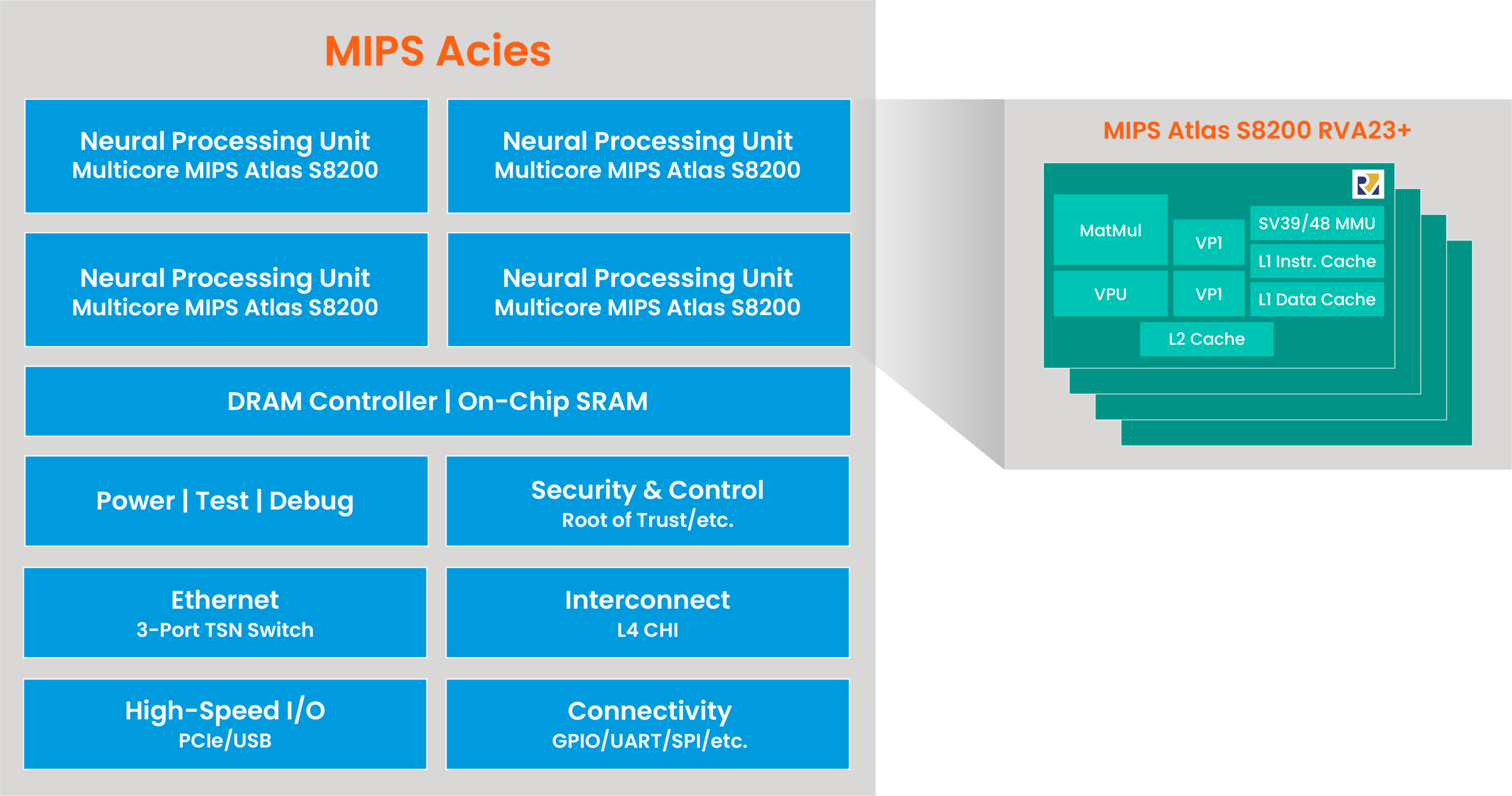
Standards-based: MIPS Atlas S8200
RVA23 profile with RVV and VME
Llama.cpp and Qwen for LLMs, plus vision transformers (ViTs) and VLAs
Atlas SDK and Graph Performance Simulator, with IREE-based MLIR for TensorFlow, PyTorch and ONNX
Easy-to-integrate M.2 PCIe form factor
Evaluate Acies-1 for your workload with virtual modeling
Block diagram: MIPS Acies-1 SoC
Any performance, power, efficiency, or other product or competitive claims are estimates based on MIPS internal projections and are subject to change. Results may vary based on final product specification, use case, workload, implementation, and other related factors outside of consideration in these statements. Performance depends on the model, data set, numerical format, software optimization, memory behavior, power constraints, and system implementation.